Diabetes Mellitus is a syndrome characterized by hyperglycemia resulting from impaired insulin secretion and /or effectiveness. There are many complications of diabetes such as retinopathy, nephropathy, atherosclerotic coronary and peripheral arterial disease and peripheral and autonomic neuropathies. There are two types of diabetes IDDM (type: insulin Dependent) and NIDDM (type II: Non insulin dependent DM).
Diabetes is called Xiao Ke in Chinese Medicine. It is believed there are three major organs involved in the disease. They are the lungs, stomach and kidney organs. There are three types (patterns) Xiao Ke (diabetes) classified by Chinese Medicine according to the patient's clinical symptoms, pulse and tongue and which organs are mainly involved
What causes Xiao Ke (diabetes) in the Chinese Medicine point of view? It is believed that people who indulged in alcohol and sweet and/or greasy foods and have an irregular, unhealthy and sedentary lifestyle are prone to develop Xiao Ke diseases. This lifestyle easily consumes and blocks the body's energy. Once the body's energy is blocked, there is stagnation and eventually, toxic heat will be generated. The toxic heat will further consume the vital organ's fluid and cause organ malfunction and disharmony. The lung organ, spleen and kidney have not been in harmony for a long time before Xiao Ke (diabetes) develops.
The first step to treating and/or preventing diabetes is to start with exercising regularly and food therapy such as the Chinese diet therapy (Chinese Yao Shan.) Recently research indicates that our muscles transport blood glucose into the muscle cells to lower blood sugar level without the need of insulin during muscle exercise. That is the reason exercise is important in preventing diabetes and helping to control blood sugar. The increased circulation prevents and helps in delaying any degenerating complication such as neuropathy.
For more information about health medicine sports browse channal at http://youtube.com/user/cosmeticmachines
how to protect your hearing Specialist talking about hearing protection
An estimated 10% of the world's population have some degree of hearing loss. Of these, one third damaged their hearing from excessive exposure to sound that could have been avoided. And the number of hearing-impaired people is growing - possibly because we are exposing ourselves to more and louder noise in the form of music, machinery, traffic and so on.
This video will help you to understand the nature of noise, the risks of exposure to noise, and how to protect your hearing from noise.
WHAT IS NOISE?
When sound reaches a level that can damage your hearing we call it noise. It is one of the most pervasive occupational health problems and a by-product of many industrial processes.
HOW DOES NOISE DAMAGE HEARING?
When a person is over-exposed to excessive sound levels, sensitive structures of the inner ear can be damaged. This can result in permanent, noise-induced hearing loss. It can happen after a brief but intense sound such as an explosion, or from regular exposure to noise over time.Hearing loss may be accompanied by tinnitus, a ringing,
buzzing or roaring in the ears or head, which may subside over time or continue constantly or intermittently throughout a lifetime.
Hearing loss caused by exposure to recreational and occupational noise is virtually 100% preventable. Here are some general tips for diminishing potential damage to your hearing:
Avoid hazardous sound environments (if you have to raise your voice to be heard, your hearing is in potential danger)
Limit the amount of time you spend in loud environments.
Wear earplugs or other hearing protective devices when
involved in a loud activity.
Protect children who are too young to protect themselves
Be careful not to turn up the volume of personal stereos too
high. The same applies to car stereos
Be alert to noise levels in your environment.
Give your ears a rest for 24 hours after exposure to dangerous levels of noise
health and high protein diets for individual health care plan خطة الرعاية الصحية الفردية
High protein diet effects aren't all positive. Plenty of fad diets, such as the Atkins Diet and the South Beach Diet, emphasize high protein content, and many dieters now avoid carbs like bread, pasta, potatoes and rice. Protein based diets can help you feel full longer and stabilize your blood sugar levels, but they also carry certain risks.
1) A High Protein Diet Increases Your Risk Of Osteoporosis
Research shows that women who eat high protein diets based on meat have a higher rate of bone density loss than those who don't. Women who eat meat lose an average of 35% of their bone density by age 65, while women who don't eat meat lose an average of 18%. In the long run, bone density loss leads to osteoporosis.
Doctors believe that the reason for this is that a high protein diet requires your body to process more calcium. While many high protein diets allow for the consumption of dairy products like milk, cheese and yogurt, your body might still extract calcium from your bones to get the extra amounts it needs to process the high amounts of protein in your diet.
2) A High Protein Diet Puts Strain On Your Kidneys
It's well known that patients with kidney problems suffer from eating a high protein diet. While dieters with normal, healthy kidney function don't seem to suffer any ill effects from eating a high protein diet, such a diet can put strain on your kidneys. Your kidneys are responsible for filtering a number of substances, including protein, from your blood. So a high protein diet can put strain on your kidneys; those with reduced kidney function should avoid such a diet.
3) High Protein Diets May Contribute to Cancer
Some studies show that high protein diets may contribute to the development of some cancers. People who eat low protein diets have been shown to have low blood levels of Insulin-like Growth Factor-1 (IGF-1). High protein diets increase blood levels of IGF-1, which some researches believe may contribute to certain forms of cancer.
4) High Protein Diets Can Cause Damage to Internal Organs
Your body needs carbohydrates to make energy. When you deprive your body of carbohydrates, it's forced to burn body and dietary fat and protein to make energy instead. When your body begins to burn large amounts of body fat, ketones can accumulate in the body. When dangerous levels of ketones accumulate in the body, the dieter could succumb to a diabetic coma, which could be deadly without immediate treatment.
Even if ketones don't accumulate to dangerous levels, you could suffer damage to the internal organs as your body burns the protein in the tissues of your heart, liver and kidneys for energy. Damage to the organs could lead, eventually, to organ failure.
5) High Protein Diets Cause Nutritional Deficiencies
Perhaps one of the most common risks of high protein diets is nutritional deficiency. Fruits and vegetables are necessary to a healthy diet, because they provide the vitamins and minerals your body needs. Cutting out whole grains eliminates dietary fiber and increases your risk of vitamin E and B deficiency, as well as irritable bowel syndrome and, in the long run, colon cancer.
Carton sealer packaging semi automatic carton sealing machine SELLADORA DE CAJAS SEMIAUTOMÁTICA from SHENZHEN PENGLAI cosmetic food making packaging machinery factory,contact us by email jackdu999@yahoo.com or skype turnanewleaf.
Max seal dimension (MM:X x 150 x 500 Min seal dimension (MM):150 x 100 x 100 Efficiency:20m/minute Worktable height:580-780MM Tape type : BOPP PVC Tape width:2" Power supply:220V 50HZ 1-Phase Packing Dimension:1160 x 900 x 930MM Weight:113KG
Carton sealing machine, Carton sealer, and Carton taping machine: Auto carton sealer is suitable for carton packing, which can be used for single use or production line. It adopts adhesive tape to seal carton, economy and fast, easy adjust. It can finish the sealing both top and bottom. Also you can adjust the height and width for different cartons. It widely used in home appliance, textile, food, general merchandise, medicine, chemical and so on. Busines blogger www.cosmeticfoodmakingpackaging.blogspot.com http://youtube.com/user/mrjackdu007
The Symptoms and Diagnosis of Asbestos Mesothelioma アスベスト中皮腫の症状と診断
The symptoms some patients experience are so slight,
that they do not think it is necessary to seek medical attention. In some cases, there may be no early symptoms experienced at all. All three types of mesothelioma: peritoneal, pericardial and pleural can be undiagnosed or missed for years, thus giving the cancer ample opportunity to metastasize to other parts of the body.
If you have experienced any of the following symptoms, not only should you seek medical attention.
Shortness of breath: Your neighbor Al always made fun of himself for being overweight, so when he began to experience shortness of breath, he thought little of it. Only when he started gasping for air as he walked the few feet from his house to his car did he realize that something was amiss.
Shortness of breath (sometimes accompanied by a heavy feeling inside of the chest) is the first symptom typically observed in mesothelioma symptoms. 90% of mesothelioma patients will experience shortness of breath, and many of them will the mistake of not seeking a doctor's advice. If you have been exposed to asbestos and you experience shortness of breath, along with heavy sensation in the chest, you should alert your doctor immediately.
Chest Pain: Aunt Sarah's husband used to work as a steamfitter in the 1950s and died recently of mesothelioma. Sarah missed him terribly, and whenever she thought of what good man he was, she experienced dull aches in her chest. She dismissed them as symptoms of a broken heart, but the aches were actually due to "an accumulation of fluid in the pleura," (National Cancer Institute) the lining around the lungs. It was a common symptom of pleural mesothelioma.
Coughing: After working thirty years as a construction worker,Harry experienced coughing fits which seemed more severe than the common cold. He tried cough syrup, but the relief it provides was only temporary. He coughed and coughed "as a reflex action to try and clear his irritated lungs of the asbestos fibers" (Mesothelioma Symptoms) but to no avail. Soon, he was spitting up saliva with an unmistakably red tint.
Weight loss: When Patrick began to drop weight without dieting or much exercise, he was initially thrilled. Within just a few months, he had dropped several pants sizes, to the pleasant surprise of everyone. No one suspected that Patrick's gradual change in size was "a symptom in about a third of all pleural mesothelioma cases in the United States." (Mesothelioma Center)
Abdominal pain and swelling:
As a youth in the 1960s, Ed was a brake mechanic. He knew more about cars and car parts than most people, and could repair a faulty vehicle with seemingly no effort. In 1997, Ed started retaining fluid in his abdomen, but his scale did not indicate any weight gain. As his abdomen swelled, his back and arms got thinner. The swelling was accompanied by abdominal pain, which Ed dismissed as a "pesky stomach virus." Week passed and the "pesky stomach virus" showed no signs of going away. Medical X-rays confirmed a far more serious ailment- peritoneal mesothelioma, caused by Ed's decades-long exposure to the asbestos lining the breaks he repaired.
Bowel obstruction: At first, Uncle Enda thought that his frequent visits to the bathroom were part of getting older. Sometimes he was able to have normal bowel movements, other times it was exceedingly difficulty. Two especially unpleasant symptoms of peritoneal mesothelioma are diarrhea (much like what a patient suffering from Inflammatory Bowel Disorder experiences) and constipation.
Anemia: Great- AuntSherry often felt faint. For years, her doctors believed that her fainting was due to a lifetime of low blood pressure, and they suggested that she incorporate iron rich foods into her diet, such as broccoli. But Sherry's health problems were far more serious than a mere lack of iron. After being diagnosed with mesothelioma, she underwent her first round of chemotherapy, which caused her more problems. The chemotherapy drugs "had a temporal effect on her bone marrow, and caused a reduction in red blood cells." (Mesothelioma Cancer Aid) This is a condition known as anemia, which can accompany mesothelioma.
Coughing up blood: Your son's baseball coach loved sports his entire life and wanted to share his passion for baseball with younger generations. As he entered his mid-sixties, people began to question when he would retire, but he had no such intention. One day, after a grueling practice, Aaron began to cough up blood, a process clinically known as hemoptysis. Hemoptysis is "one of the most alarming of the mesothelioma symptoms. It is sometimes accompanied by difficulty swallowing (dysphagia) as well as hoarseness."
kidney function in animation how our Kidney Works Wie funktioniert die Niere 私たちの腎臓のしくみ
We can live quite well with only one kidney and some people live a healthy life even though born with one missing. But while bones can break, muscles can waste away and the brain can sleep without risk to life, if both of your kidneys fail, as happens in end stage kidney failure, bone, muscle or brain can not carry on.
How do our kidneys work?
Think of your kidneys as an extremely sophisticated, waste disposal system, which sorts non-recyclable waste from recyclable waste, 24 hours a day, 7 days a week, while also cleaning your blood. Much of this waste is produced by the body as it processes the food you eat.
Without any kidney function our body dies. Some kidney function is essential for life!
Most people are born with two kidneys, each one about the size of an adult fist, are bean-shaped and weigh around 150 grams each. The kidneys are located at both sides of your backbone, just under the rib cage or above the small of your back. They are protected from injury by a large padding of fat, your lower ribs and several muscles.
What do your kidneys do?
Our kidneys are small biological marvels with a fascinating design. Healthy kidneys act like a filter to make sure the right amount of wastes and fluids are removed. Every hour your blood supply circulates through the kidneys about 12 times. Each day your kidneys process around 200 litres of blood, with around 1 to 2 litres of waste leaving the body as urine. Our kidneys make three important hormones, erythropoietin, renin and active vitamin D. Erythropoietin stimulates the production of red blood cells, renin is involved in the control of blood pressure and active vitamin D controls calcium uptake and helps make strong bones.
What is the role of your kidneys in keeping you healthy?
For organs so small, your kidneys works hard - they have a number of vital roles to play in the daily functions of our body, as they:
act as filters for your body to clean blood of wastes, yet retain essential elements needed by the body
they keep the proper balance of salts and acids in the body, and produce hormones and enzymes which help to:
control your blood pressure
help to keep your internal water balance
make red blood cells and help maintain your blood composition and pH levels
maintain strong and healthy bones and help to keep mineral balance
Your kidneys are master chemists of the body, intervene in many processes and balances in the body and control many vital body functions. The major role of the kidneys is to remove waste from the blood and eliminate it in the urine. To remove this waste and extra water, blood enters the kidney through the renal artery; blood is then cleaned in the kidney as it passes through tiny filters called nephrons. The nephrons are the basic working units of the kidneys, controlling the formation of urine. One kidney contains about one million nephrons, and each nephron contains a filtering apparatus called a glomerulus.
Anatomy of the kidneys
We have about a million hairpin-like glomeruli at birth, but lose about 100,000 of these every decade of life. Droplets of filtered blood pass through a number of tubules (tiny tubes) into the medulla, a central collecting region. The glomeruli and tubules together make up nephrons, long and extremely fine tubes which, if connected, would run for 80 kilometres (50 miles).
Cleaned blood returns to the body by the renal vein. Waste and extra water removed by the kidney passes through a tube called the ureter to the bladder, where it is stored as urine or wee. When the bladder is full, urine passes out of the body through another tube called the urethra.
The process of removing waste and extra water in simple terms is:
food and drink enters the stomach and are broken down into nutrients
solid waste products are removed and nutrients enter the bloodstream.
nutrients are used by the body for energy, growth, repair and maintenance of body functions.
this process creates waste which is removed by the kidneys.
extra nutrients not immediately needed by the body are also removed by the kidneys.
waste products and extra water move from the kidneys to the bladder, then leave the body as urine
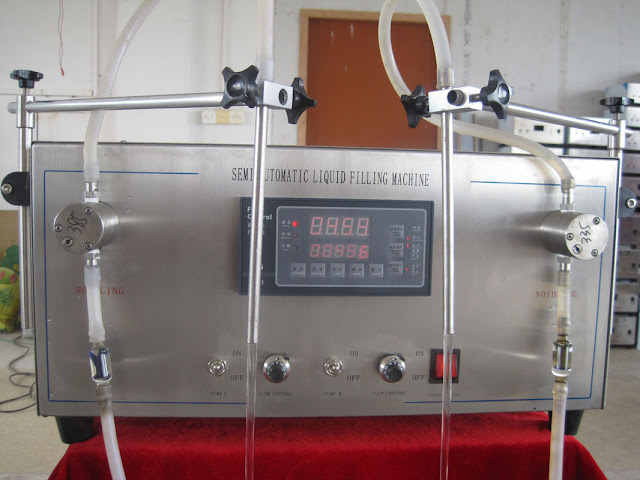
Features of liquid filler: 1. Imported frequency inverter, with high-precision multi-turn potentiometer and can lock the dial, so that stable and accurate flow control, error is smaller at negative 0.5%, less than 1.5% correct; 2. Magnetic gear imported stainless steel (316) pump, reliable quality and long life; stainless steel chassis, sophisticated appearance; 3. Small, easy to operate; 4. Full function, automatic manual can be equipped with assembly line work; 5. can be equipped with multiple filling heads, commonly used models are: single pump, double pumps and four pump machine; 6. Can charge the vast types of liquid filling, such as: pharmaceuticals, chemicals, oils, cosmetics, food and other non-granulated liquid; 7. Filling volume LH-A from 1ml to 10000ml adjustable; LH-B from 10ml-80000ml adjustable, easy to adjust.
Technical Parameter of filling machine
: Model LH-I-A Rated Voltage 220V 50/60Hz Power 38W Max. Flow Single pump above1.4L/M Tolerance ±1% Machine Size(mm) 400*300*250 Net Weight 11Kg Packing Size(mm) 480*380*33
We are experienced in the cosmetic making machines with professional engineers. As we all know that different products have different requirements, we can recommend you the suitable machine and model according to your specification , if you are interested in the
liquid filling machines or other cosmetics machines